JEE Main Previous Year Question Papers with Answer Keys & Solutions (Download Free PDFs)
Introduction to JEE Main Previous Year Question Papers
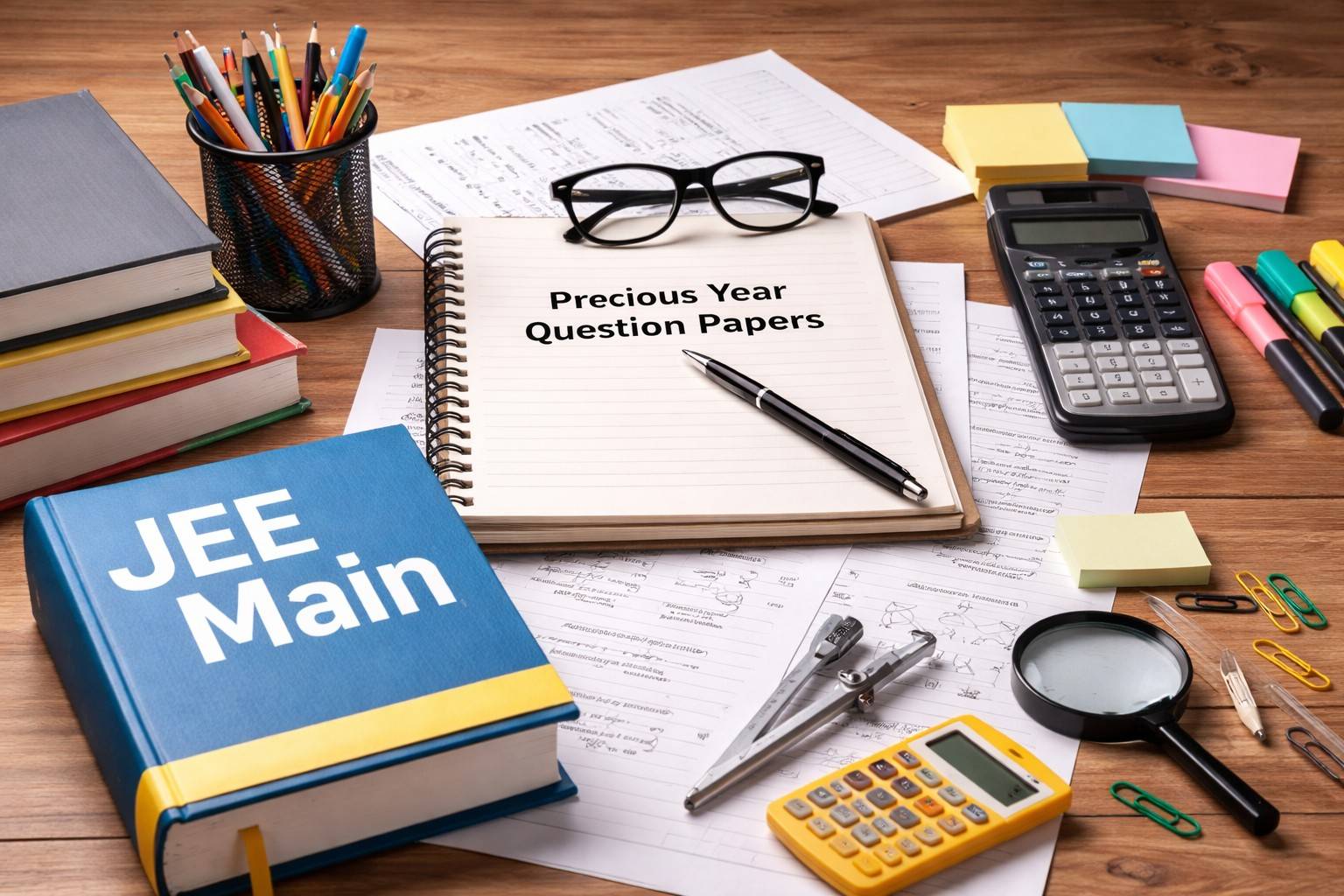
Every JEE aspirant reaches a moment when preparation feels “done” on paper-but confidence still feels incomplete. Notes have been revised, formulas memorised, and chapters ticked off, yet the question remains: Am I actually ready for the exam? This is exactly where JEE Main previous year question papers (PYQs) become the most powerful preparation tool.
Unlike coaching sheets or reference books, PYQs don’t guess the exam pattern-they show it. They reflect how questions are framed, how options are designed to confuse, and how concepts are tested under time pressure. Solving JEE Main PYQs gives students a real sense of what the exam feels like, not just what the syllabus says.
More importantly, PYQs shift preparation from “studying more” to “studying smarter.” They help students focus on what actually matters, reduce unnecessary effort, and build confidence through familiarity. For a competitive exam like JEE Main, this difference is critical.
Free JEE Main Previous Year Question Papers (Solved PDFs)
Get all Papers + Solutions in one place
JEE Main Previous Year Question Papers (Year-Wise PDFs)
Solving year-wise JEE Main PYQs helps students understand how the exam evolves over time. Each year reflects a slightly different emphasis based on trends, syllabus changes, and exam design.
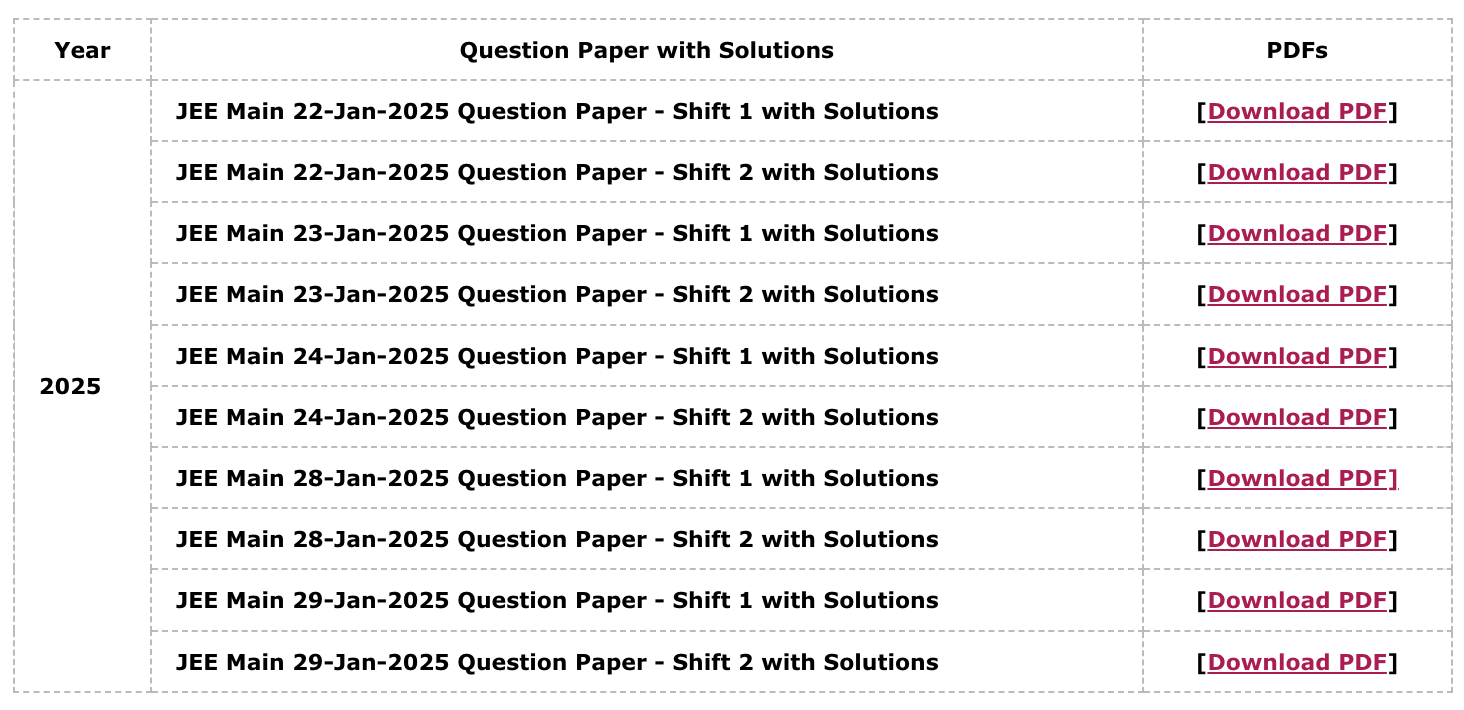
JEE Mains 2025 Question Paper with Solutions (January, Session-1)
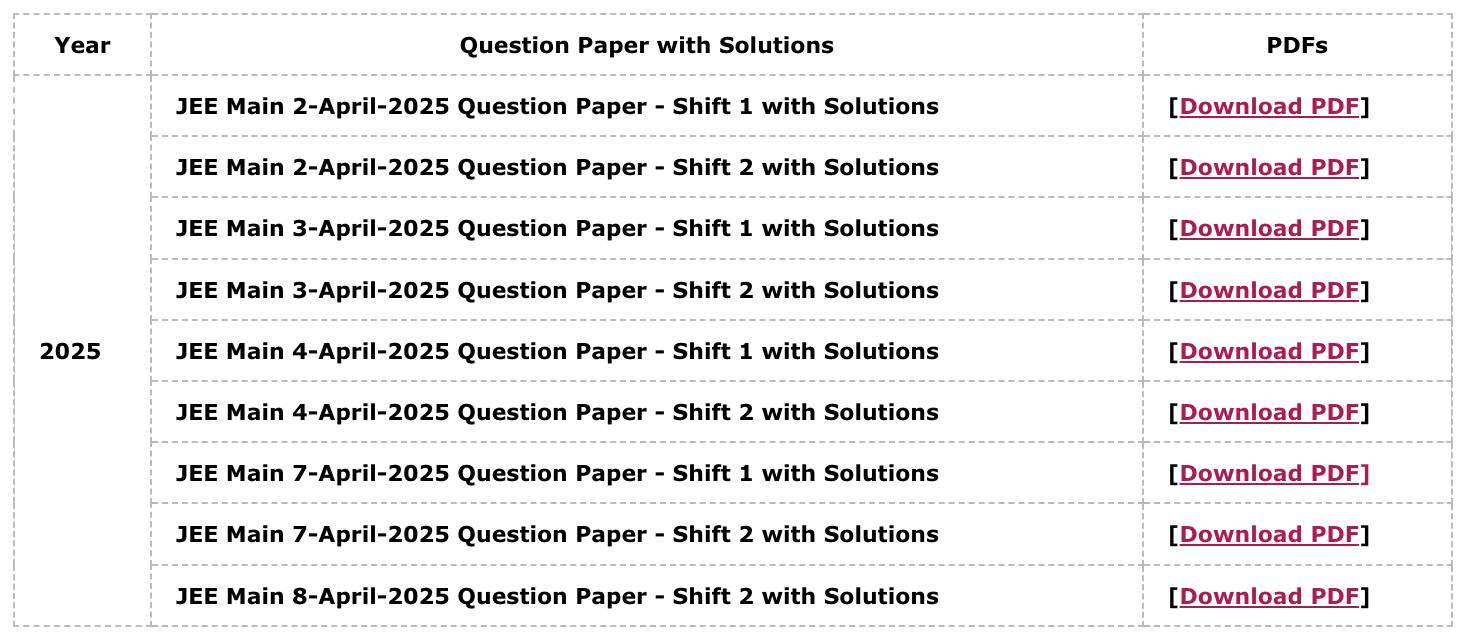
JEE Mains 2025 Question Paper with Solutions (April, Session-2)
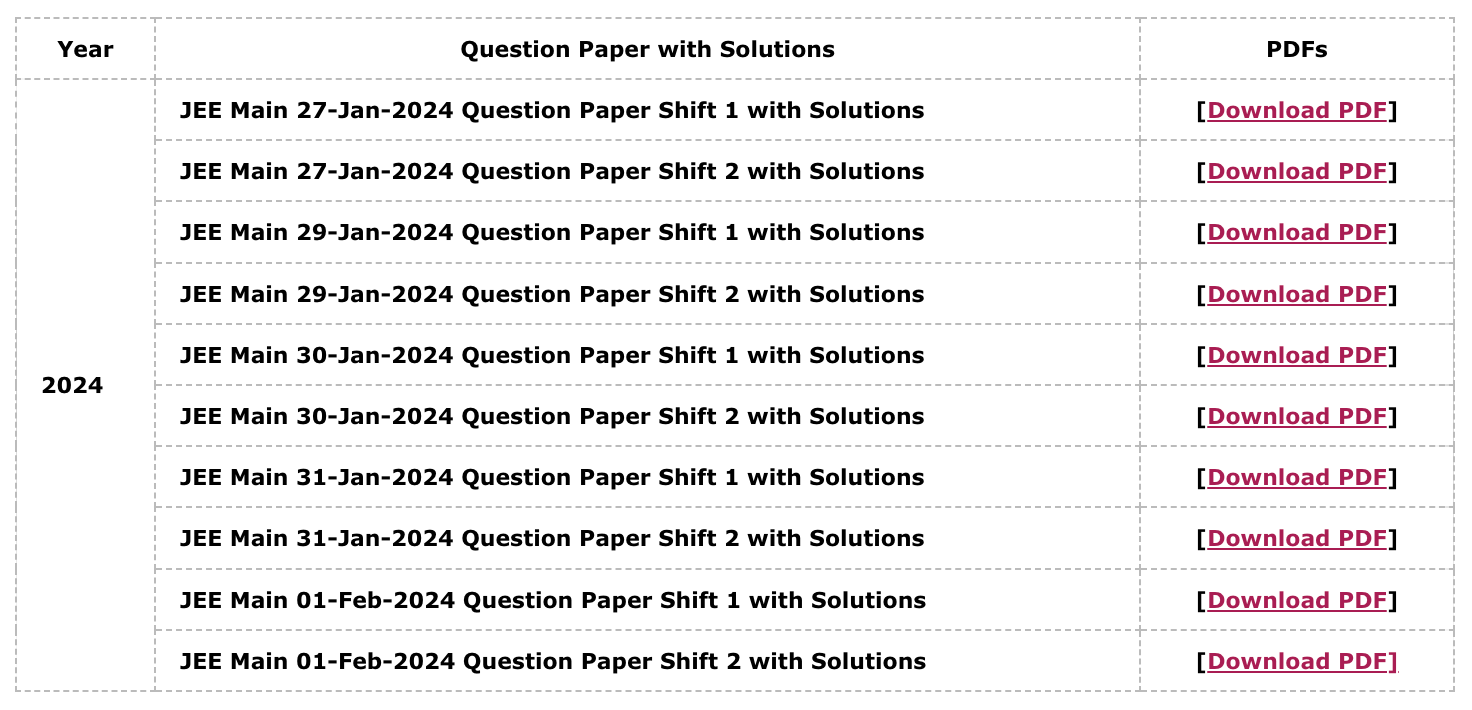
JEE Mains 2024 Question Paper with Solutions (January, Session-1)
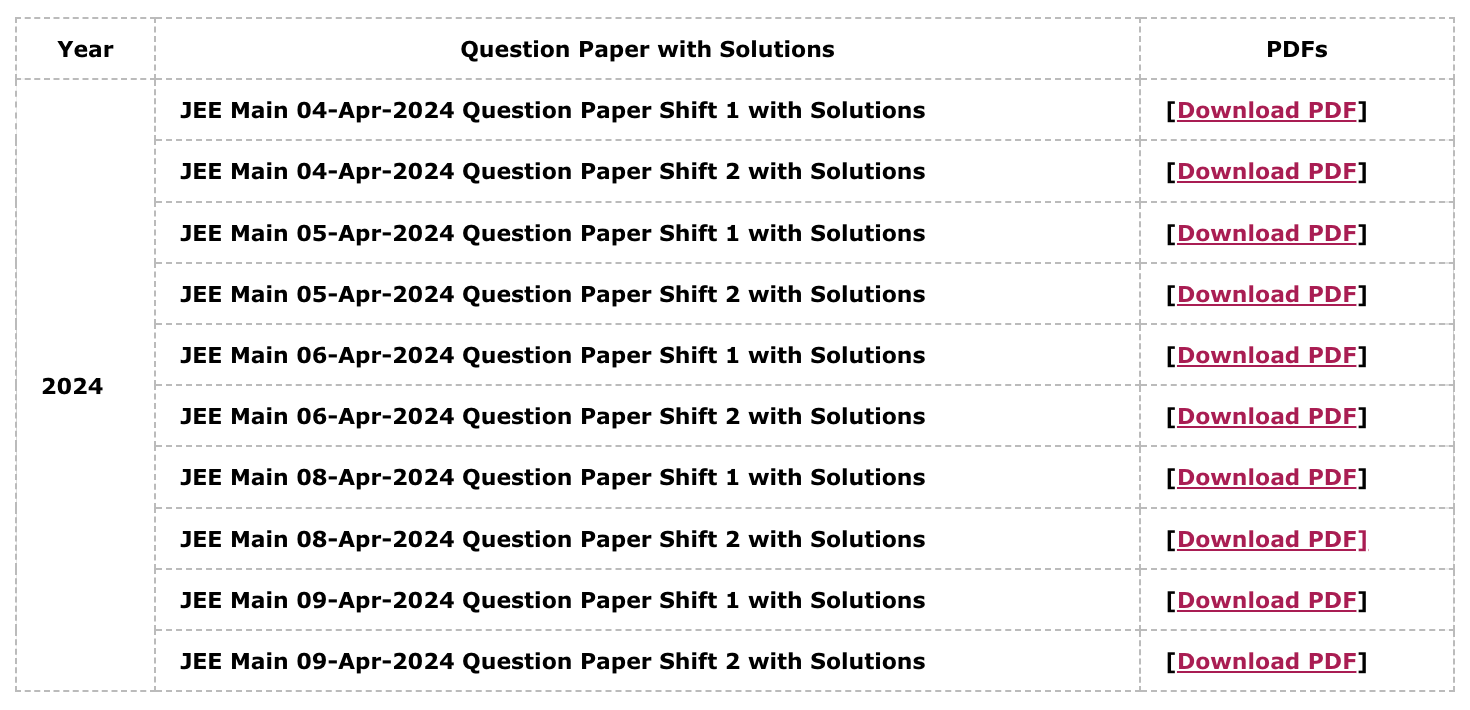
JEE Mains 2024 Question Paper with Solutions (April, Session-2)
JEE Mains 2023 Question Paper with Solutions (January, Session-1)
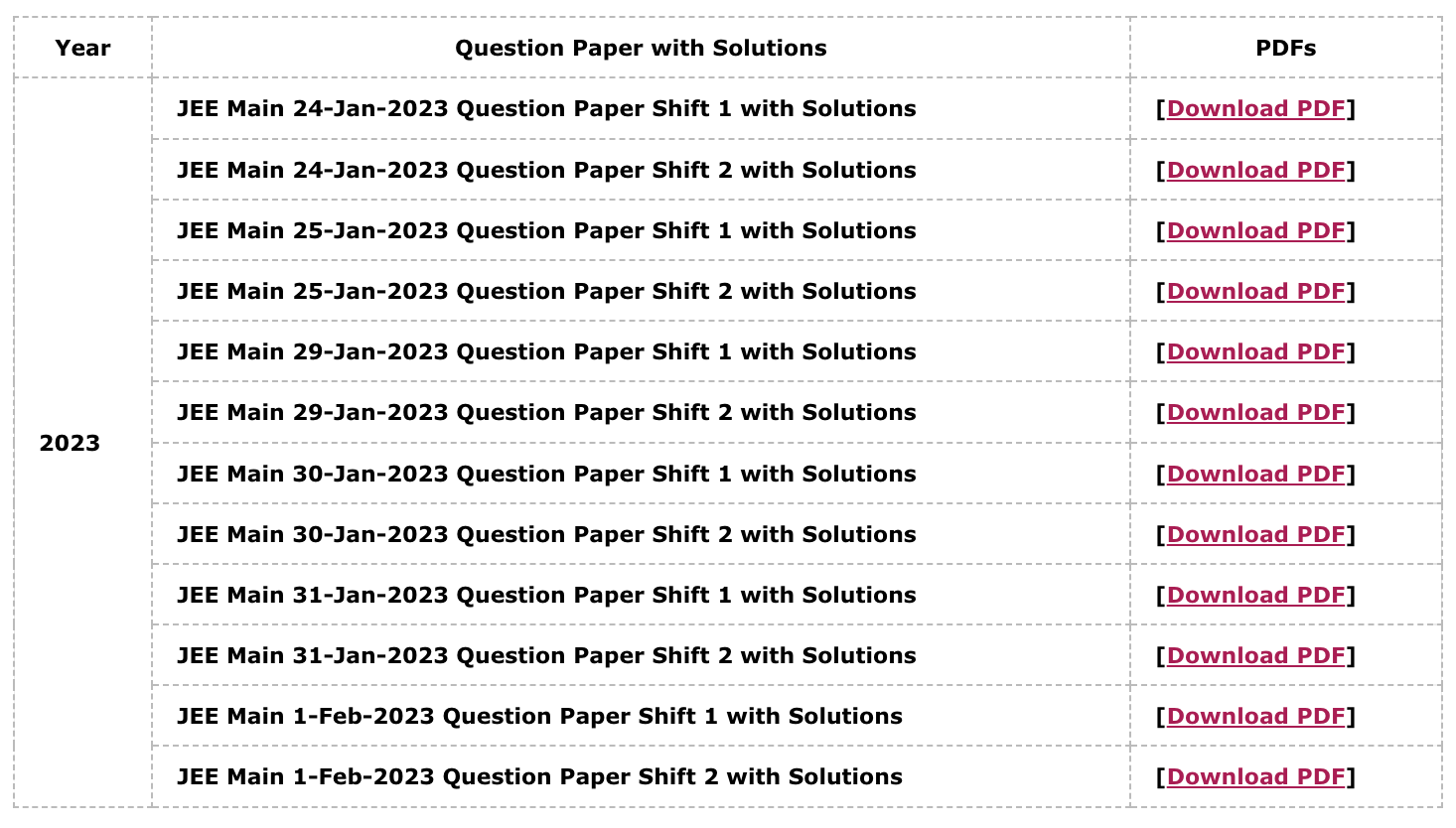
JEE Mains 2023 Question Paper with Solutions (April, Session-2)
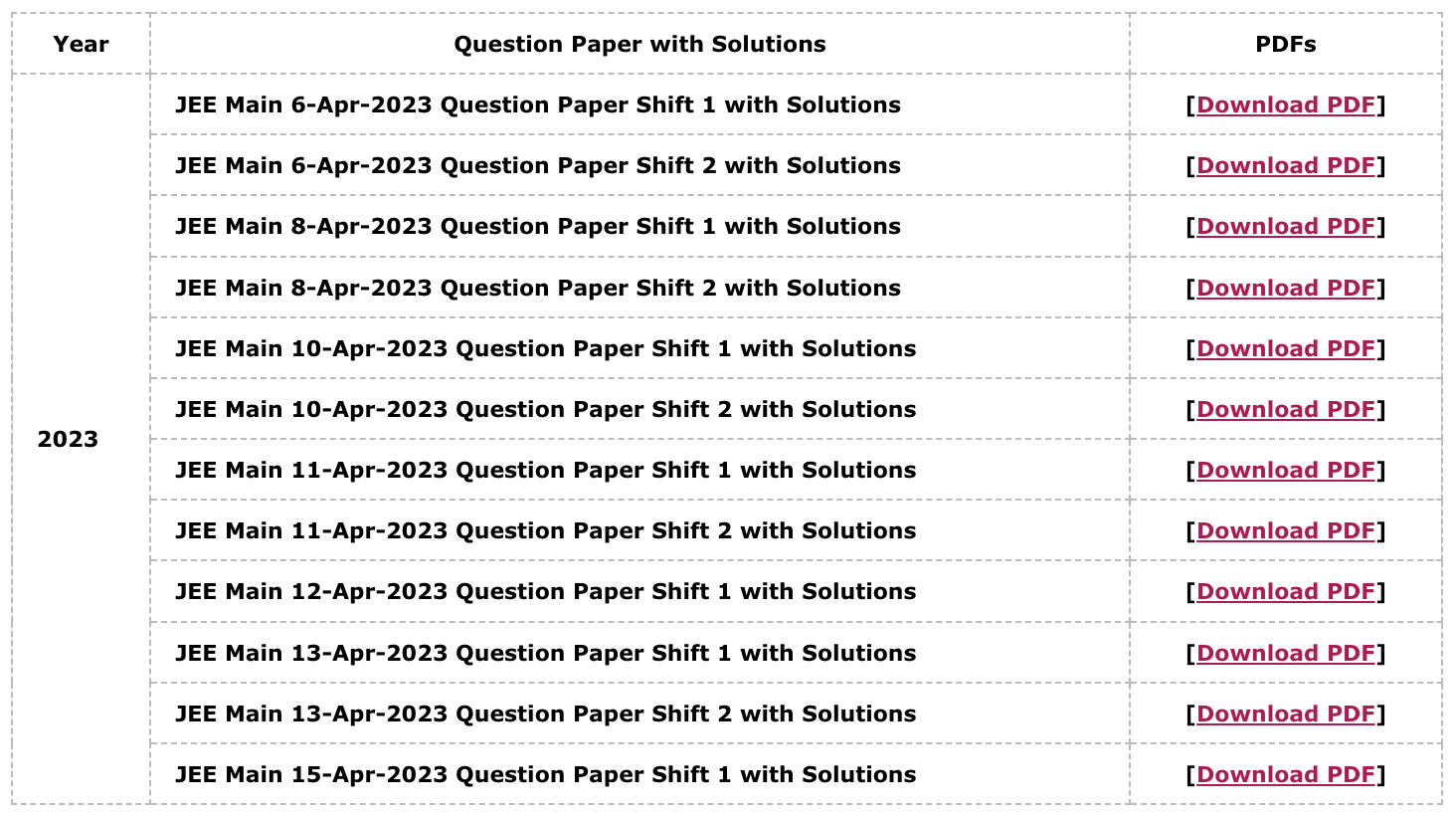
JEE Mains 2022 Question Paper with Solutions (June, Session-1)
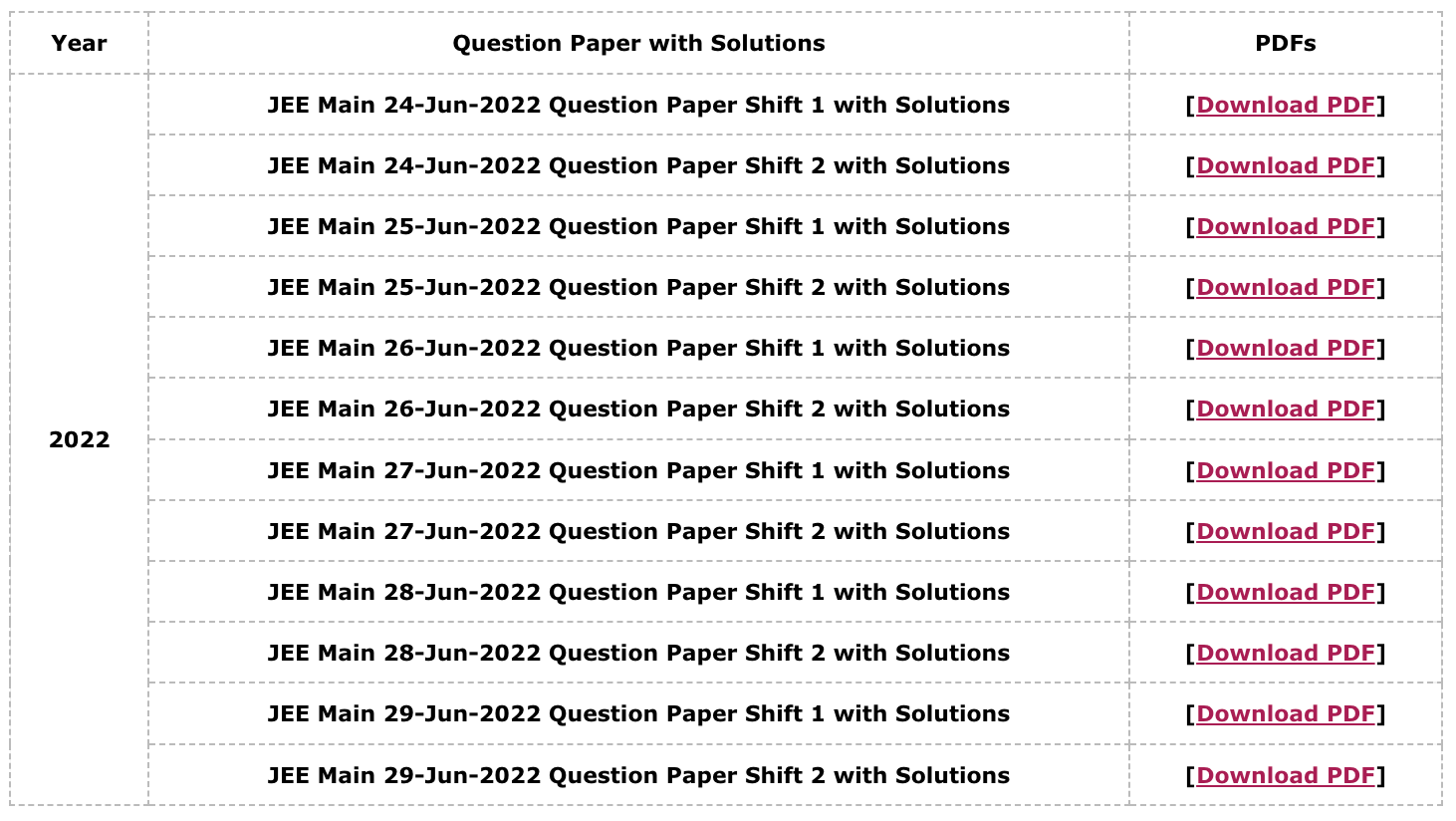
JEE Mains 2022 Question Paper with Solutions (July, Session-2)

JEE Mains 2021 Question Paper with Solutions (February, Session-1)
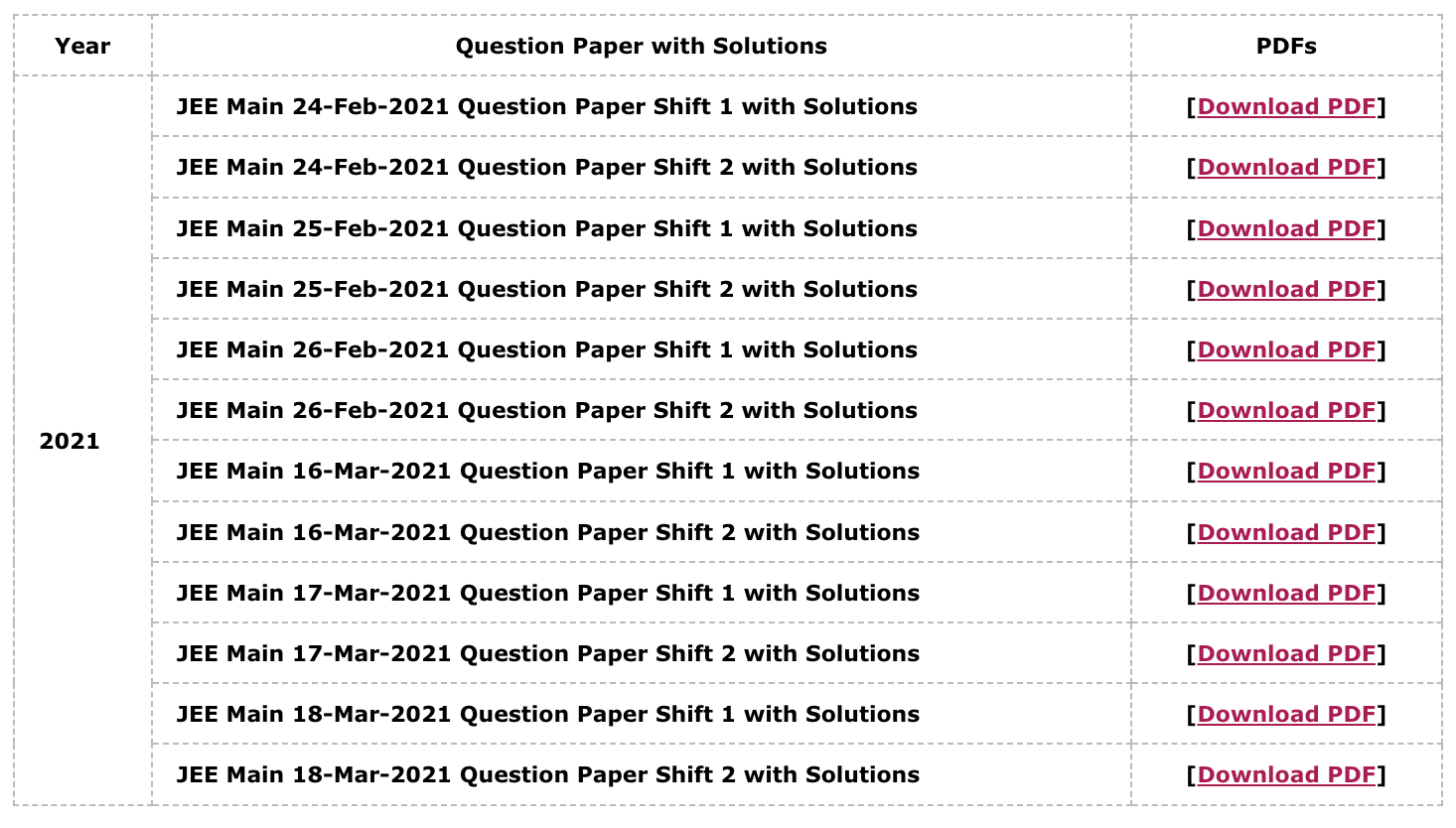
JEE Mains 2021 Question Paper with Solutions (July, Session-2)
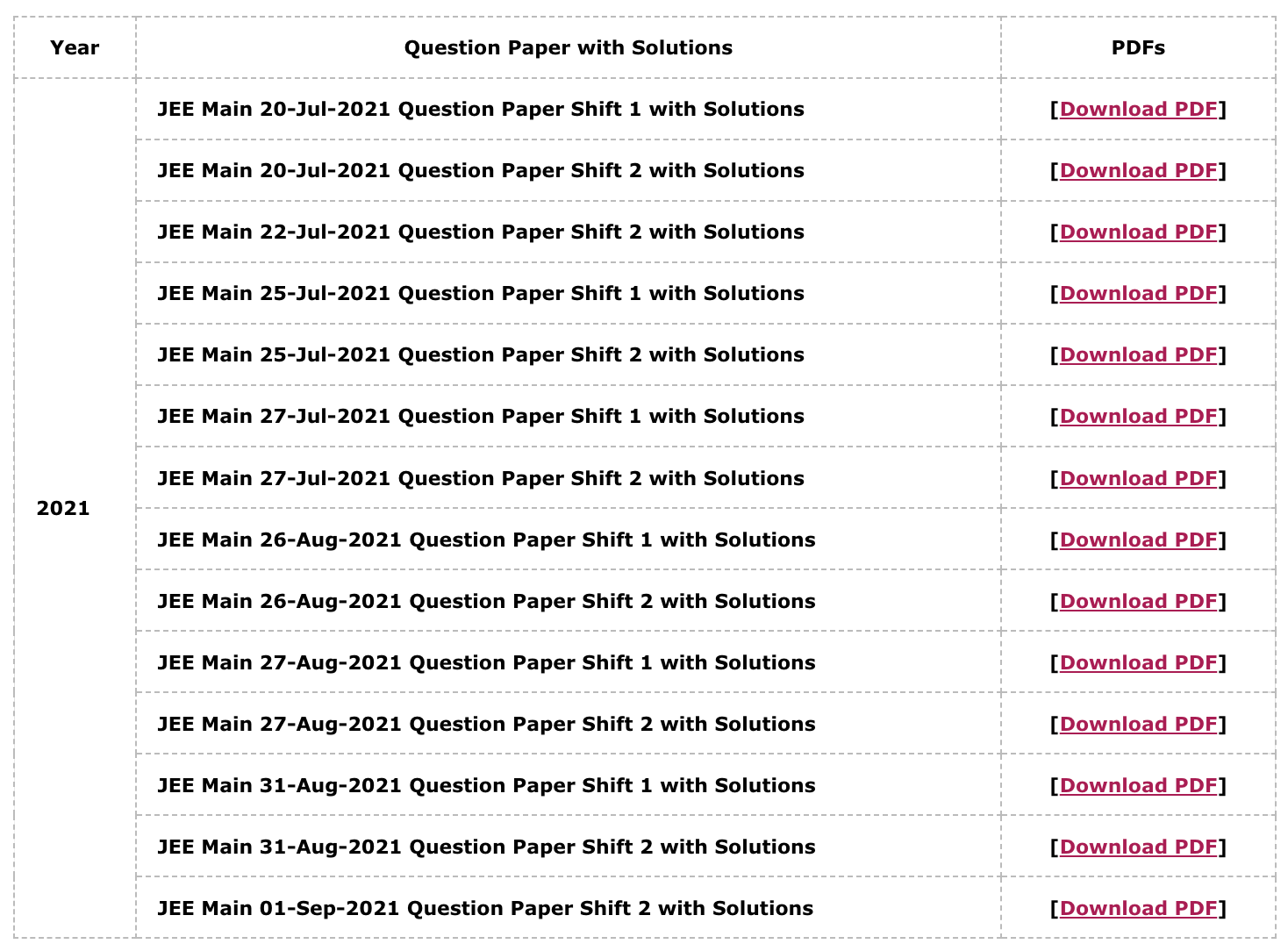
JEE Mains 2020 Question Paper with Solutions (January)
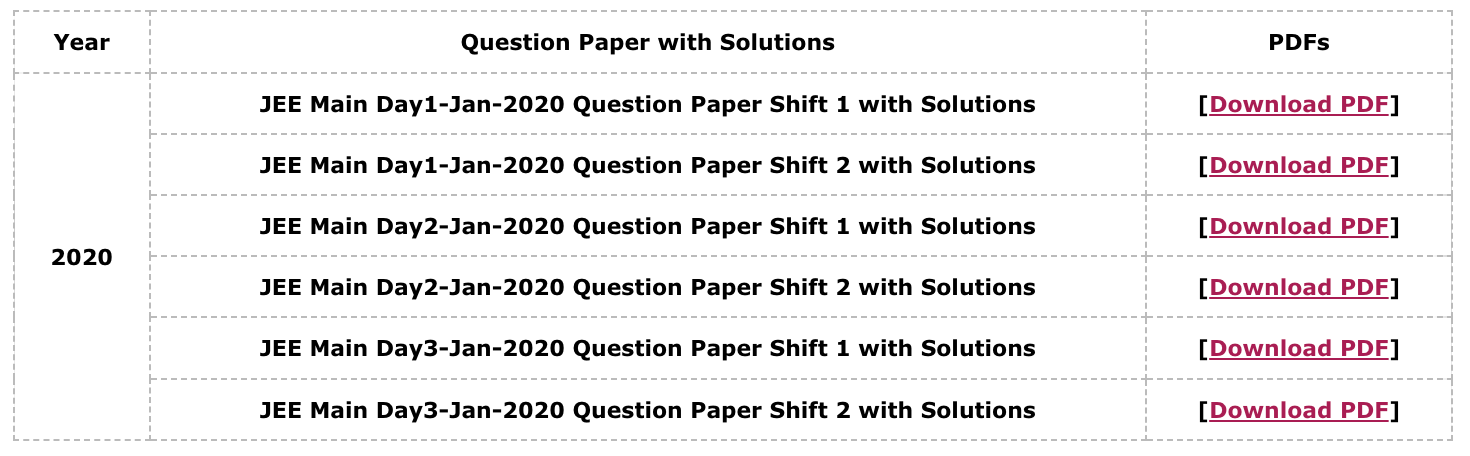
JEE Mains 2019 Question Paper with Solutions (January, Session-1)
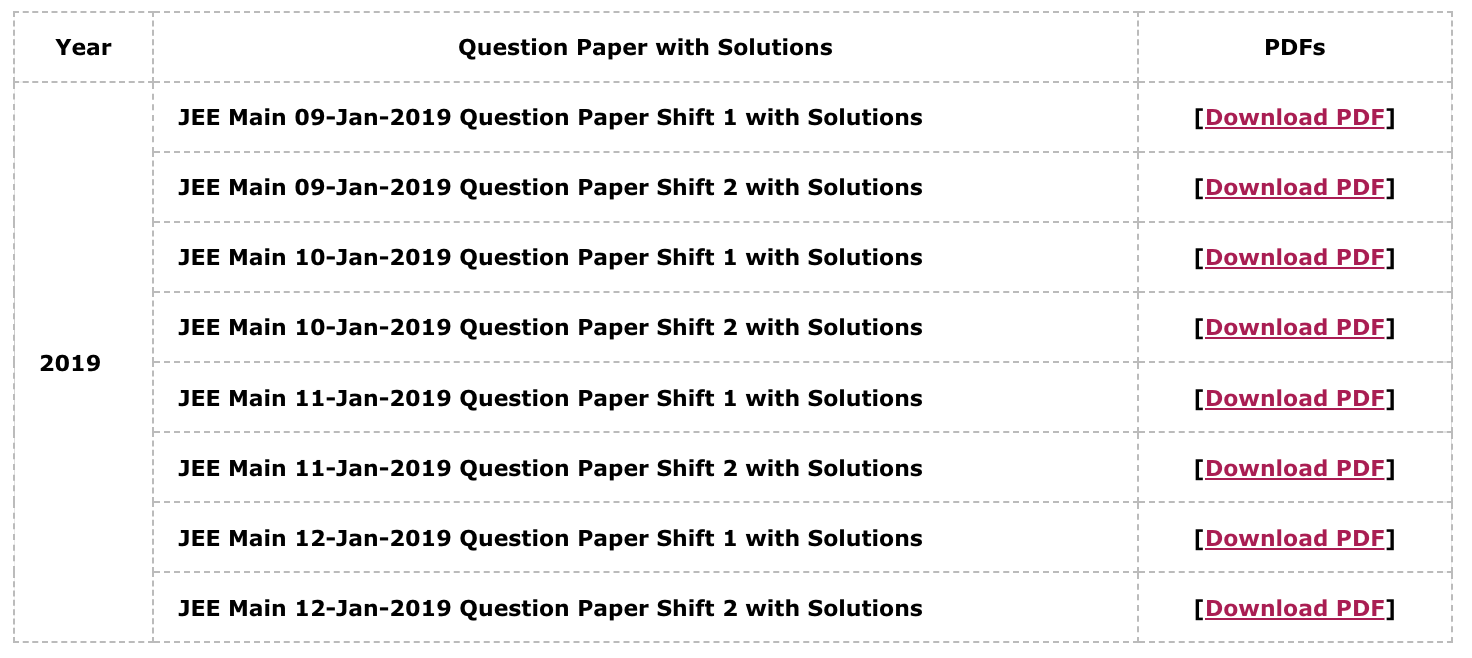
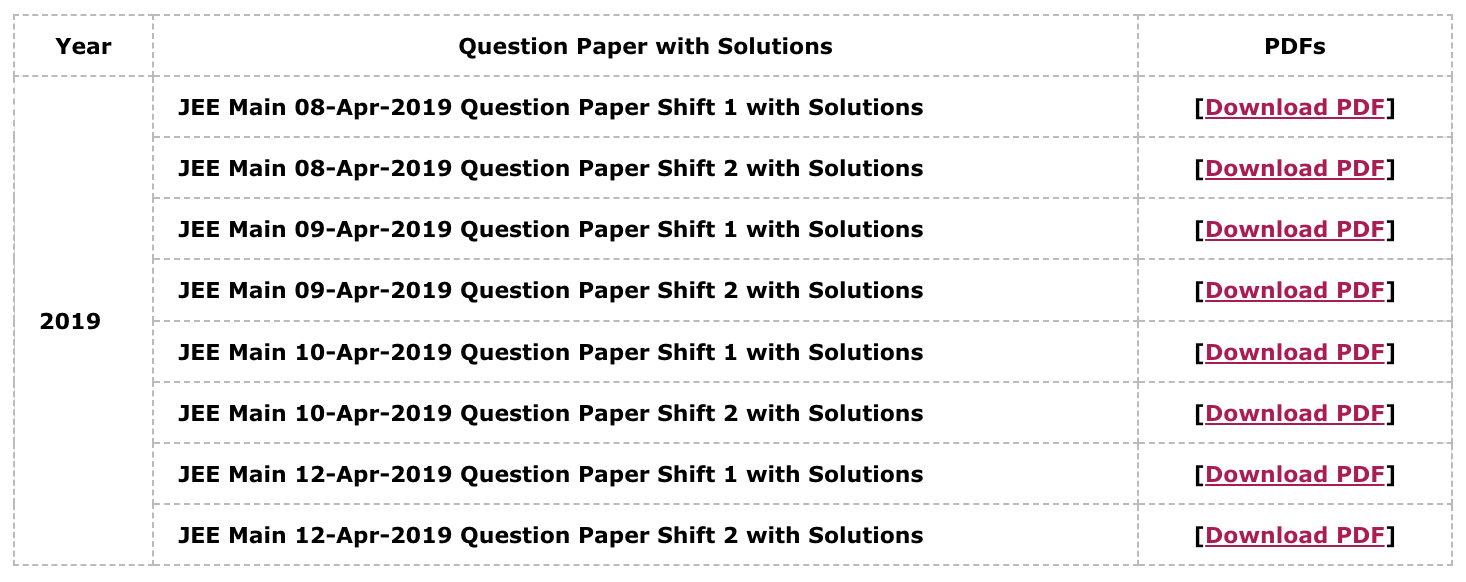
JEE Mains 2019 Question Paper with Solutions (April, Session-2)
Recent Trends You’ll Notice
- Some years focus more on conceptual clarity
- Some years increase numerical-based questions
- Some papers feel lengthy but relatively easier
- Some years test speed more than depth
Year-Wise Utility Overview
Year | What Students Commonly Notice |
2025 | Balanced paper, strong NCERT focus |
2024 | Slightly tricky numericals |
2023 | Concept-heavy Physics |
2022 | Speed-based Maths |
2021 | Mixed difficulty across shifts |
2020 | Strong Chemistry weightage |
2019 | Pattern transition year |
Most students download JEE Main question papers PDF, attempt them in one sitting, and then analyse mistakes carefully. Treat each paper as a full mock exam, not casual practice.
Why Solve JEE Main Previous Year Question Papers?
Many students wonder whether solving PYQs is really worth the time compared to studying theory or taking mock tests. The answer becomes clear once you experience the results.
Key Benefits of JEE Main PYQs
- You understand how questions are actually asked, not how textbooks explain concepts
- You identify topics and concepts that repeat across years
- You improve speed, accuracy, and smart question selection
- You learn how to handle exam pressure calmly
- You reduce fear by making the exam feel familiar
One of the biggest advantages of PYQs is mindset training. Regular exposure to real exam papers teaches your brain how JEE Main “thinks.” Over time, patterns become recognisable, surprises reduce, and confidence increases naturally.
This is why mentors consistently stress why solving JEE Main question papers is non-negotiable, especially in the last phase of preparation.
JEE Main Subject-Wise Previous Year Question Papers
Every student has strengths and weak areas. Subject-wise PYQs help target those gaps without overwhelming the entire syllabus.
Physics PYQs
JEE Main Physics questions often test clarity more than heavy calculations. PYQs reveal recurring concepts from:
- Mechanics
- Current electricity
- Modern physics
Students learn when to apply formulas directly and when conceptual understanding matters more.
Chemistry PYQs
JEE Main Chemistry PYQs clearly highlight the importance of NCERT. Inorganic reactions, organic mechanisms, and physical chemistry numericals repeat in patterns.
Maths PYQs
Maths PYQs train students for speed and smart selection. Calculus and algebra dominate, and PYQs help students learn which questions to skip initially.
Subject-wise practice allows focused improvement without unnecessary stress.
JEE Main Shift-Wise Question Papers & Analysis
Since JEE Main is conducted in multiple shifts, difficulty can vary slightly.
Why Shift-Wise Papers Matter
- Morning shifts may feel lengthier
- Evening shifts sometimes include unexpected numericals
- Topic distribution may vary
Solving JEE Main shift-wise question papers builds adaptability. Instead of fearing a “tough shift,” students learn to adjust strategy calmly.
Memory-based papers can provide early insights, but they should be used carefully and never replace official PYQs.
JEE Main Question Papers with Solutions & Answer Keys
Solving JEE Main question papers with solutions and answer keys is one of the most effective ways to turn practice into real improvement. While attempting questions helps test your knowledge, reviewing solutions helps you understand how and why a problem should be solved in a particular way. This learning gap is where most score improvement happens.
A good JEE Main answer key allows you to quickly check accuracy, but the real value lies in detailed solutions. These explain alternative methods, shortcuts, and elimination techniques that save time during the actual exam. Many students realise that their mistakes are not due to lack of concepts, but due to calculation errors, misreading, or poor question selection.
The right way to use solved papers is simple: attempt the paper honestly under timed conditions, check answers only after completing it, and then analyse every wrong or guessed question. Over time, this habit reduces repeated mistakes, improves logical thinking, and builds exam confidence. Used consistently, solved PYQs become a powerful tool for mastering JEE Main.
JEE Main Exam Pattern Through Previous Year Papers
The clearest way to understand the JEE Main exam pattern is by solving previous year question papers. While official notifications explain the structure, PYQs show how the pattern actually feels in the exam-under time pressure, with real question framing and traps.
From past papers, students quickly notice the mix of MCQs and numerical-based questions, along with how marks and negative marking affect strategy. Physics questions often test conceptual clarity more than lengthy calculations. Chemistry closely follows NCERT, rewarding students who know the basics well. Mathematics, on the other hand, is speed-driven and requires smart question selection.
Previous year papers also reveal time management realities. Many students realise they don’t lose marks due to lack of knowledge, but because they spend too long on tough questions early on. PYQs train you to identify which questions to attempt first and which to skip.
Overall, analysing JEE Main exam pattern through PYQs turns abstract rules into practical understanding-helping students enter the exam hall prepared, confident, and in control.
Topic-Wise Weightage from JEE Main PYQs
One of the biggest advantages of solving JEE Main previous year question papers (PYQs) is that topic-wise importance becomes clear naturally. Instead of relying on guesswork or coaching predictions, PYQs show which concepts appear repeatedly and which ones are tested in different variations year after year.
From Physics PYQs, students often notice that topics like Mechanics, Current Electricity, Magnetism, and Modern Physics carry consistent weight. Questions may look different, but the underlying concepts repeat frequently.
In Chemistry, PYQs highlight the strong role of NCERT-based Inorganic Chemistry, recurring Organic reaction mechanisms, and formula-driven Physical Chemistry numericals.
For Mathematics, past papers clearly show the dominance of Calculus and Algebra, with coordinate geometry and vectors appearing regularly.
Rather than memorising exact percentages, PYQs help students prioritise revision smartly. Over time, topic weightage becomes intuitive-guiding what to revise deeply and what to practise for speed. This approach leads to focused preparation instead of scattered effort.
How to Use JEE Main Previous Year Question Papers for Best Results
Solving JEE Main previous year question papers (PYQs) is most effective when done with a clear strategy. Random practice helps little; structured practice brings real improvement.
Start with untimed practice in the early phase. Focus on understanding question patterns, difficulty levels, and concept application without worrying about speed. Once comfortable, shift to full-length timed attempts, solving papers in one sitting to simulate real exam conditions.
After each paper, dedicate time to detailed analysis. Identify whether mistakes were due to weak concepts, calculation errors, misreading, or poor time management. Maintain an error notebook and revise it regularly-this prevents repeating the same mistakes.
Use PYQs to learn smart question selection. Not every question must be attempted; PYQs train you to identify high-confidence questions quickly and skip risky ones. In the final weeks, solve one paper daily to build speed, accuracy, and exam temperament. When used consistently and honestly, PYQs become the backbone of strong JEE Main preparation.
JEE Main Previous Year Question Papers vs Mock Tests
Students often wonder whether they should focus more on JEE Main previous year question papers (PYQs) or mock tests. The truth is-both serve different purposes, and using them together gives the best results.
Previous Year Question Papers show the real exam standard. They help you understand actual question framing, topic trends, difficulty level, and time pressure faced in JEE Main. PYQs reduce fear by making the exam feel familiar and predictable. They are best for building confidence, understanding patterns, and revising important concepts.
Mock Tests, on the other hand, are designed to stretch your limits. They introduce new question variations, test your speed, and help improve stamina. Mock tests are especially useful for practising time management and adapting to unfamiliar questions.
The smartest strategy is a balanced approach:
- Use PYQs to understand the exam and strengthen fundamentals
- Use mock tests to improve speed, flexibility, and performance under pressure
Together, they prepare you for both accuracy and adaptability on exam day.
Common Mistakes Students Make While Solving JEE Main PYQs
JEE Main previous year question papers are powerful tools-but only if used correctly. Many students solve PYQs regularly yet fail to see improvement because of a few common mistakes.
One major error is solving PYQs without a timer. Without time pressure, practice does not reflect real exam conditions, and students struggle on the actual test day. Another frequent mistake is checking solutions too quickly. When answers are seen immediately, the brain skips the thinking process, reducing learning value.
Students also tend to ignore post-paper analysis. Simply attempting questions is not enough-understanding why a mistake happened is what leads to improvement. Some aspirants focus only on strong subjects and avoid weak topics, which creates score gaps later. Lastly, treating PYQs like casual practice instead of full-length mock exams reduces their impact.
To avoid these pitfalls:
- Always practice with a timer
- Analyse every wrong answer
- Maintain an error notebook
- Reattempt weak areas
Used thoughtfully, PYQs can dramatically improve confidence and performance.
JEE Main Preparation Tips Using Previous Year Question Papers
Using JEE Main previous year question papers (PYQs) correctly can make a huge difference in your preparation, especially in the final phase. These papers are not just practice material-they are a guide to how the exam actually tests concepts.
Start by solving PYQs without time pressure in the early stage. This helps you understand question patterns and revise concepts calmly. Once you are comfortable, shift to full-length timed practice, attempting each paper in one sitting to simulate exam conditions.
After every paper, spend quality time analysing mistakes. Identify whether errors happened due to weak concepts, calculation slips, or poor time management. Maintain a small error notebook and revise it regularly-this alone can boost accuracy significantly.
Use PYQs to learn smart question selection. Not every question needs to be attempted; PYQs teach you when to skip and move on. In the last few weeks, solve one previous year paper daily to build confidence, speed, and exam temperament. Consistent, honest practice with PYQs turns preparation into performance.
Why Choose ITM School of FutureTech after JEE Main?
After receiving your JEE Main result, the next major decision is where to pursue your engineering education. For many students, this choice goes beyond rankings and exam scores-it’s about selecting an institute that bridges academic foundations with real-world engineering skills. ITM School of FutureTech is one such option that appeals to aspirants looking for a balanced, future-oriented engineering experience.
One of the key reasons students consider ITM School of FutureTech is its industry-integrated curriculum. The institute focuses on contemporary engineering fields-especially in Computer Science and emerging technology domains-ensuring that what you learn in class aligns with actual industry demands. This practical orientation helps students build job-ready skills from early semesters rather than waiting until the final year.
Another advantage is the emphasis on hands-on learning through real projects and internships. Engineering is as much about application as theory, and students at ITM benefit from structured project work, lab exposure, and opportunities to collaborate with industry partners. These experiences enhance both technical understanding and professional confidence.
For students considering engineering colleges in Mumbai, ITM also offers a strategic location advantage-proximity to tech companies, startups, and professional networks that can support internships and placements.
Finally, the institute places strong focus on career support and employability, with dedicated guidance on resume building, interview preparation, and industry exposure. For many JEE Main qualifiers who want an education that prepares them for the future of technology and innovation, ITM School of FutureTech is a compelling choice worth exploring.
Conclusion: JEE Main Previous Year Question Papers
JEE Main previous year question papers are more than just practice material-they are a roadmap to exam readiness. They help students move beyond theory and experience how concepts are actually tested under time pressure. With regular PYQ practice, patterns become familiar, fear reduces, and confidence grows naturally.
The real value of PYQs lies in how they are used. Solving them in timed conditions, analysing mistakes honestly, and revising weak areas turns preparation into performance. PYQs also teach smart question selection, time management, and accuracy-three factors that matter as much as knowledge in JEE Main.
When combined with concept revision and mock tests, previous year papers create a balanced and realistic preparation strategy. Start early, practise consistently, and trust the learning process. With disciplined use of PYQs, students can approach the JEE Main exam with clarity, control, and the confidence to perform at their best.
FAQs on JEE Main Previous Year Question Paper
Are JEE Main PYQs enough for preparation?
They form a strong base but should be combined with concept revision and mock tests.
How many years of PYQs should I solve?
At least 5-7 years for pattern clarity.
Where can I download JEE Main PYQs?
From official portals and trusted educational platforms.
Do questions repeat in JEE Main?
Exact repetition is rare, but concepts repeat often.
Should I solve PYQs topic-wise or full length?
Start topic-wise, then move to full-length papers.
Do PYQs help understand exam pattern?
Yes, more effectively than any brochure.
Are solved PYQs better than unsolved?
Solved PYQs help more during analysis stages.
Can PYQs alone help get a good rank?
They build a strong base but must be combined with testing and revision.