Best BTech Courses After 12th in 2026: Eligibility, Fees, Career & Salary Guide
What Are the Best BTech Courses After 12th? (Quick Overview)
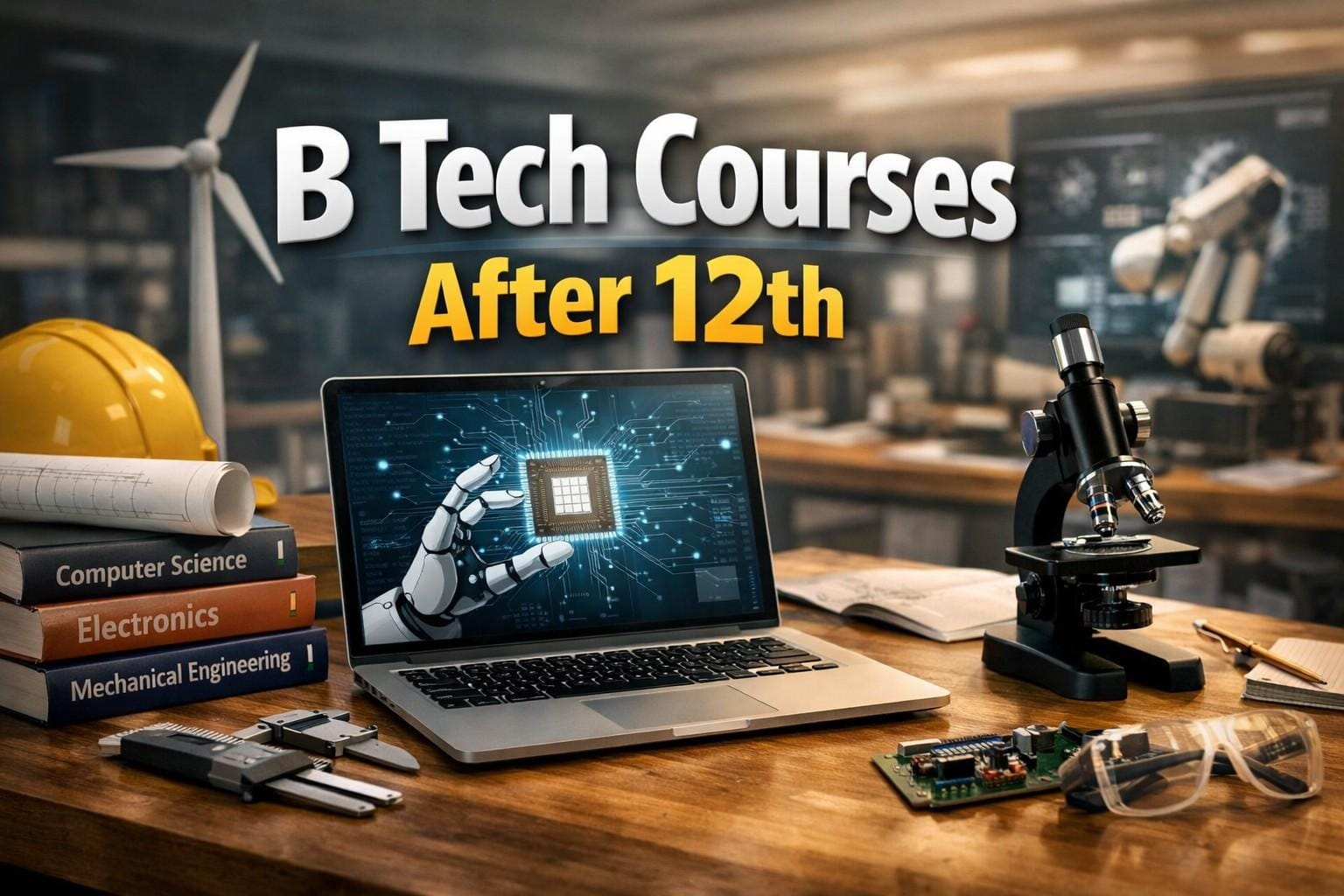
BTech courses after 12th are 4-year undergraduate engineering programs that students pursue after completing Class 12 with Physics, Chemistry, and Mathematics. These programs focus on technical skills, problem-solving, and industry-oriented learning.
Some of the best BTech courses include Computer Science Engineering, Artificial Intelligence & Data Science, Cyber Security, Mechanical Engineering, Civil Engineering, Electronics & Communication, Electrical Engineering, Aerospace Engineering, Robotics, and Biotechnology - all considered among the top engineering branches after 12th.
In India, average starting salaries typically range between ₹3–8 LPA, depending on branch, college, skills, and internship experience.
What Is BTech and Why Choose It After 12th?
If you’re wondering what is BTech, it stands for Bachelor of Technology - a professional undergraduate engineering degree. It usually spans 4 years, divided into 8 semesters, combining classroom learning, lab work, and industry projects.
The benefits of BTech after 12th include structured technical education, access to core engineering industries, and eligibility for government and private sector roles. Engineering graduates are required across IT, manufacturing, infrastructure, electronics, and emerging tech sectors.
The overall engineering career scope remains strong in India due to continuous infrastructure growth, digital transformation, and industrial expansion. With the right specialization and practical exposure, BTech offers stable long-term growth.
Eligibility Criteria for BTech Courses After 12th
Understanding btech eligibility after 12th is essential before applying.
Basic Requirements
- Completion of Class 12
- Physics, Chemistry, and Mathematics mandatory
- Minimum marks criteria (varies by university)
- Entrance exam qualification (in most cases)
The PCM requirement for BTech is compulsory for most institutions because mathematics forms the base of engineering studies.
Many students ask: can commerce student do btech?In most cases, no - unless they switch to PCM subjects or pursue alternative technical degrees like BCA.
Diploma holders can apply through lateral entry, joining directly in the second year of BTech programs.
Top BTech Courses After 12th (Branch-Wise List)
There is a wide list of BTech courses available after Class 12 science. The right choice depends on your interests, aptitude, and long-term goals. This btech branch list covers traditional and modern engineering domains.
Students exploring engineering courses after 12th science should balance passion and industry demand before selecting a branch.
BTech in Computer Science Engineering (CSE)
BTech CSE focuses on coding, software development, algorithms, databases, and AI basics. Students interested in computer science engineering after 12th usually enjoy programming and problem-solving.
The average CSE salary for freshers ranges between ₹4–8 LPA in IT companies.
BTech in Artificial Intelligence & Data Science
The BTech Artificial Intelligence program covers machine learning, data analytics, and automation. This AI engineering course prepares students for future-focused roles in data science engineering and analytics.
Demand is growing steadily across industries.
BTech in Cyber Security
The BTech Cyber Security course trains students in data protection, ethical hacking, and system security. Cyber security engineering professionals help prevent digital attacks and secure enterprise systems.
BTech in Mechanical Engineering
Mechanical engineering after 12th deals with machines, manufacturing systems, automotive design, and industrial equipment. The mechanical engineering scope includes production plants, automobile companies, and energy sectors.
BTech in Civil Engineering
Civil engineering after 12th focuses on infrastructure development — roads, bridges, buildings, and smart cities. There are steady civil engineering jobs in construction and government projects.
BTech in Electronics & Communication Engineering (ECE)
The ECE course after 12th includes electronics circuits, telecom systems, chip design, and embedded systems. The electronics engineering scope covers telecom, semiconductor, and automation industries.
BTech in Electrical Engineering
Electrical engineering after 12th deals with power systems, renewable energy, and electrical machines. The electrical engineer salary grows with experience in power and energy companies.
BTech in Aerospace Engineering
The aerospace engineering course focuses on aircraft and spacecraft design, propulsion, and aerodynamics. The aerospace engineer salary in India depends heavily on specialization and research exposure.
BTech in Robotics & Automation
Robotics engineering after 12th combines automation, AI integration, and industrial robotics. This field supports smart factories and Industry 4.0 innovation.
BTech in Biotechnology
The biotechnology engineering course merges biology and technology. Biotech after 12th leads to roles in pharmaceuticals, healthcare research, and bio-processing industries.
Emerging BTech Courses in 2026–2035 (Future-Ready Engineering)
The demand for future engineering branches is evolving rapidly.
High-growth areas include:
- AI & Machine Learning
- Cloud Computing Engineering
- Blockchain Technology
- Internet of Things (IoT)
- Renewable Energy Engineering
These high demand engineering courses 2026 align with automation, sustainability, and digital transformation. Many are also classified under Industry 4.0 courses, reflecting smart manufacturing and data-driven systems.
Students choosing future-ready specializations should ensure the curriculum includes real-world projects.
BTech Courses Without JEE Mains
If you’re worried about JEE, relax.
You can pursue BTech without JEE through:
- State CET exams
- Private university entrance tests
- Direct admission in BTech under management quota
Many institutions offer engineering admission without JEE Mains, but always check accreditation and placement history before enrolling.
Entrance Exams for BTech After 12th
Major BTech entrance exams 2026 include:
- JEE Mains – National-level exam
- JEE Advanced – For IIT admissions
- MHT CET – Maharashtra state exam
- Other state engineering entrance exams
- University-level exams
Each exam differs in difficulty and eligibility. Preparing strategically improves your chances of admission to reputed colleges.
Duration & Fee Structure of BTech Courses
The standard BTech course duration is 4 years.
Course Duration
- 4 years
- 8 semesters
- Includes labs, internships, and a final-year project
Fee Structure
- Government colleges: Lower tuition fees
- Private institutions: Higher engineering course cost
- Additional costs: Hostel, labs, materials
BTech fees in India vary widely depending on infrastructure and location.
Salary After BTech in India (Branch-Wise Comparison)
The BTech salary in India depends heavily on branch and skillset.
Entry-Level (0–2 Years)
The average engineering fresher salary ranges from ₹3–7 LPA.
Mid-Level (3–7 Years)
Salaries grow to ₹8–15 LPA in strong-performing sectors.
Highest Paying Engineering Branches
- Computer Science
- Artificial Intelligence
- Data Science
- Cyber Security
IT branches typically offer faster salary growth compared to some core engineering fields. However, core sectors provide stability and government opportunities.
Career Options After BTech
Your career after BTech can move in multiple directions:
- Private sector IT & core jobs
- Government jobs after BTech (PSUs, defence, railways)
- Higher studies (M.Tech, MBA, MS Abroad)
- Entrepreneurship
There are diverse jobs after engineering, depending on specialization and experience.
How to Choose the Right BTech Branch After 12th
Choosing wisely matters.
When thinking about how to choose engineering branch, consider:
- Your interest and aptitude
- Industry demand
- Long-term sustainability
- Internship exposure
The debate of interest vs salary engineering is real. The best engineering branch for future balances passion and market growth.
Skills Required to Succeed in BTech
Key skills for engineering students include:
- Analytical thinking
- Programming knowledge
- Communication skills
- Team collaboration
- Problem-solving mindset
- Continuous learning attitu
Continuous upskilling increases employability.
Why Choose ITM School of FutureTech for BTech Courses?
Choosing the right engineering college is as important as selecting the right BTech branch. ITM School of FutureTech stands out for students seeking practical, industry-aligned engineering education.
- Industry-Focused Curriculum: Courses designed with input from leading tech companies to match real workplace requirements.
- Advanced Labs & Infrastructure: Modern laboratories, AI-enabled tools, and project-based learning facilities.
- Internship Integration: Structured internships with reputed companies help build practical experience.
- Placement Support: Dedicated placement cell offering company networking, mock interviews, and career guidance.
- Project-Driven Learning: Hands-on projects that enhance problem-solving and technical skills.
- Urban Tech Exposure: Located in Mumbai, students benefit from proximity to IT hubs, startups, and corporate environments.
This combination of practical training, industry exposure, and strong support systems helps students launch successful engineering careers.
Common Mistakes Students Make While Choosing BTech Courses
Avoid:
- Following trends blindly
- Choosing branch due to peer pressure
- Ignoring placement statistics
- Selecting college without research
Wrong BTech branch selection can affect long-term satisfaction.
Conclusion: Is BTech Still a Good Career Option in 2026?
BTech remains a strong and relevant career choice in 2026 for students who plan wisely. With rapid growth in technology, infrastructure, and innovation, engineering offers diverse opportunities across IT and core sectors. Success depends on choosing the right specialization, selecting a reputed college, and developing practical skills through internships and projects. Students who align their interests with industry demand and commit to continuous learning can build stable, high-growth engineering careers in India and globally.
FAQs on BTech Courses After 12th
Which is the best BTech course after 12th?
Computer Science and AI remain highly popular choices.
Can I do BTech without JEE?
Yes, through state CET or private university exams.
What is the duration of BTech?
The BTech course duration is four years.
Which BTech branch has the highest salary?
AI, Data Science, and Computer Science branches.
Can commerce students apply for BTech?
Usually no, PCM subjects are mandatory.
What are the entrance exams for BTech in 2026?
JEE Mains, state engineering entrance exams, university tests.
Is AI engineering better than CSE?
Depends on specialization interest and career goals.
What is the average salary after BTech in India?
Engineering fresher salary ranges between ₹3–7 LPA.
Which engineering branch is best for government jobs?
Civil and Electrical offer strong government opportunities.
Can I pursue MBA after BTech?
Yes, many engineers shift to management roles.
What skills are required for engineering students?
Analytical thinking, programming, teamwork, problem-solving.
Is BTech better than BSc?
BTech is more application-oriented and technical.
What is lateral entry in BTech?
Diploma holders join directly in second year.
Are internships important during BTech?
Yes, internships improve placement opportunities significantly.
Is BTech good for future career growth?
Yes, with right specialization and skill development.