What Is Hospitality Management? Courses, Careers, Salaries & Scope
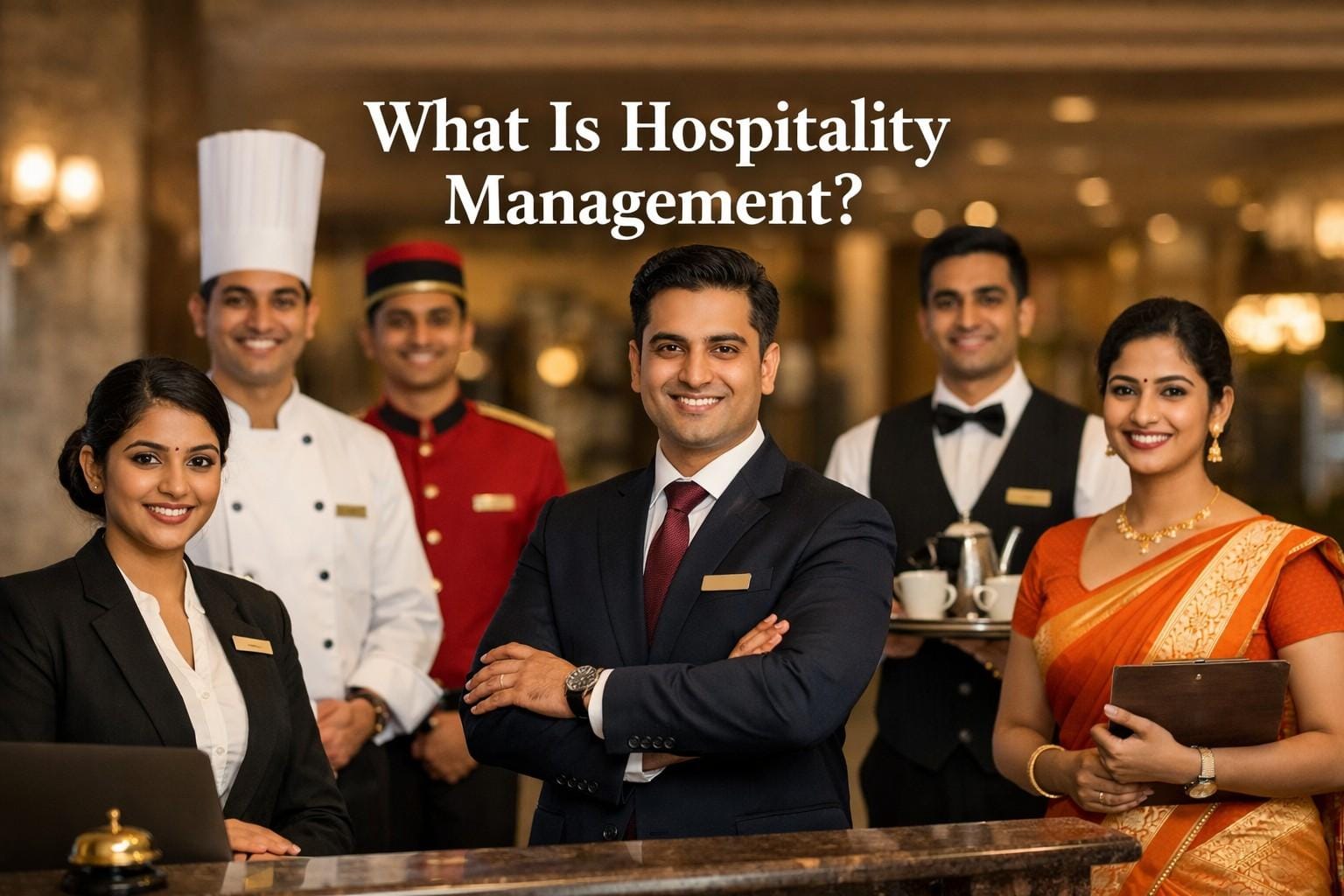
Introduction: What is Hospitality Management?
What is hospitality management? In simple terms, hospitality management refers to the planning, coordination, and delivery of services that ensure guests feel welcomed, comfortable, and satisfied. It is a professional field focused on managing people, services, and experiences across industries where customer interaction is central.
The hospitality management definition goes beyond hotels and restaurants. It includes tourism, travel, events, luxury services, airlines, cruise lines, and even wellness and recreation sectors. At its core, hospitality management is about creating memorable experiences while maintaining operational efficiency and business profitability.
The roots of hospitality can be traced back to ancient civilizations where hosting travellers was considered a social responsibility. Over time, this tradition evolved into a global industry that now contributes significantly to employment and economic growth. Today, hospitality management plays a crucial role in the global economy, especially in countries like India, where tourism and service industries are rapidly expanding.
Hospitality Management: A Comprehensive Definition
To fully understand what is hospitality management is, it is important to look at its structure and scope. Hospitality management involves overseeing daily operations, managing staff, maintaining service quality, and ensuring customer satisfaction across various service-driven environments.
A modern hospitality management overview includes:
- Guest experience design
- Service operations and quality control
- Revenue and cost management
- Marketing and brand positioning
- Human resource management
Unlike traditional service jobs, hospitality management focuses on leadership and strategic decision-making. Professionals in this field are trained to manage teams, handle customer expectations, and adapt to changing market trends.
While hotel management is a major component, hospitality management is broader in scope. It covers multiple service sectors, making it a versatile and future-ready career option.
Importance of Hospitality Management in Today’s World
The importance of hospitality management has grown significantly in the modern service economy. As customer expectations rise, businesses can no longer rely only on products-they must deliver experiences.
Hospitality management plays a key role in:
- Tourism and travel industries
- Corporate and social events
- Food and beverage services
- Entertainment and leisure sectors
From boosting tourism revenue to promoting cultural exchange, the hospitality management significance is both economic and social. Well-managed hospitality services enhance a country’s global image, create employment opportunities, and support allied industries such as transportation, retail, and entertainment.
In a competitive global market, businesses that invest in professional hospitality management gain customer loyalty, stronger brand reputation, and sustainable growth.
Core Functions & Key Areas of Hospitality Management
Hospitality management is built around several operational areas, each contributing to seamless guest experiences.
Front Office Operations
This is the first point of contact for guests. Responsibilities include reservations, check-ins, guest communication, and handling queries efficiently.
Food & Beverage Service
This area focuses on restaurant operations, menu planning, service standards, hygiene, and customer satisfaction.
Housekeeping Management
Housekeeping ensures cleanliness, comfort, and safety. Effective management here directly impacts guest perception and reviews.
Event & Conference Management
From weddings to corporate conferences, hospitality professionals manage planning, logistics, coordination, and execution of events.
Customer Service Excellence
Delivering personalized service, handling feedback, and resolving complaints are central to long-term success in hospitality.
These areas of hospitality management work together to ensure smooth operations and memorable guest experiences.
Hospitality vs Hotel Management: What’s the Difference?
The debate around hospitality management vs hotel management is common among students.
Aspect | Hospitality Management | Hotel Management |
Scope | Broad service industries | Primarily hotels |
Career Options | Tourism, events, airlines, luxury services | Hotels and resorts |
Skill Focus | Leadership, service design, business | Hotel operations |
Hospitality management offers wider career pathways and greater flexibility, while hotel management is more specialized. Understanding this difference helps students choose the right academic path.
Courses in Hospitality Management: From Basics to Advanced
There are various hospitality management courses designed to match different career goals.
Certificate Courses
Short-term programs focusing on basic service skills and entry-level roles.
Diploma Courses
Industry-oriented programs with practical exposure and operational training.
Undergraduate Degrees (B.Sc / BHM)
Comprehensive programs covering operations, management, and business fundamentals.
Postgraduate Programs (MHM / MBA in Hospitality)
Advanced courses focused on leadership, strategy, and global hospitality trends.
Choosing the right hospitality management education depends on career aspirations, academic background, and long-term goals.
Skills Required for a Career in Hospitality Management
Success in hospitality depends heavily on soft skills and adaptability.
Communication & Interpersonal Skills:
Clear communication is essential in hospitality management, as professionals interact daily with guests, teams, and service partners from diverse backgrounds.
Problem-Solving & Adaptability:
Hospitality environments are fast-paced and unpredictable. The ability to think quickly, resolve issues efficiently, and adapt to changing situations is highly valued.
Cultural Sensitivity & Emotional Intelligence:
Understanding different cultures, guest expectations, and emotions helps in delivering personalized and respectful service experiences.
Leadership & Teamwork:
Hospitality managers must motivate teams, manage staff performance, and lead by example to maintain service quality and operational efficiency.
Time Management & Attention to Detail:
Handling multiple tasks while maintaining high standards is crucial for long-term success in hospitality management careers.
Career Opportunities in Hospitality Management
The range of hospitality management jobs is vast and diverse.
Hotel & Resort Careers:
Hospitality management graduates can work in hotels and resorts in roles such as front office managers, guest relations executives, housekeeping managers, and operations supervisors.
Cruise & Airline Hospitality Roles:
Opportunities are available in cruise lines and airlines, where professionals manage onboard services, customer experience, and luxury travel operations.
Event Management & Planning:
From weddings to corporate conferences, hospitality professionals handle event coordination, logistics, vendor management, and guest services.
Food & Beverage Leadership:
Careers include restaurant managers, banquet managers, and food service directors overseeing quality, service standards, and profitability.
Tourism & Travel Services:
Graduates can also work in travel agencies, destination management companies, and tourism boards, building careers that offer both creativity and global exposure.
Salary & Growth Prospects in Hospitality Management
The hospitality management salary varies based on role, experience, and location.
Entry-Level Salaries:
Fresh graduates starting their careers in hospitality management can expect salaries ranging from ₹2.5 to ₹4.5 LPA in roles such as management trainees, front office executives, or food and beverage supervisors.
Mid-Level Growth:
With 3-5 years of experience, professionals can move into managerial positions, earning between ₹6 to ₹10 LPA. At this stage, specialization and performance play a key role in career advancement.
Senior Leadership Roles:
Experienced professionals working as general managers, operations heads, or consultants can earn ₹15 LPA or more, especially in luxury hotels and international brands.
Global Opportunities:
International hospitality markets offer higher pay scales, faster growth, and exposure to global service standards, making hospitality management a high-potential career choice.
(Source: Naukri.com)
Why Study Hospitality Management at ITM Institute of Hotel Management
Choosing the right institute is crucial. ITM Institute of Hotel Management stands out as a leading hospitality management institute in Mumbai.
Industry-Aligned Curriculum:
ITM Institute of Hotel Management offers a curriculum designed in collaboration with industry experts, ensuring students learn relevant skills aligned with current hospitality trends.
Hands-On Practical Training:
Students gain real-world experience through advanced training kitchens, mock hotel setups, and practical labs, strengthening operational and managerial skills.
Internship & Placement Support:
The institute provides structured internships and strong placement assistance with leading hotels, resorts, airlines, and hospitality brands.
Experienced Faculty:
Learning from industry professionals and experienced educators helps students gain practical insights and career guidance.
Strategic Location Advantage:
Located in Mumbai, ITM offers unmatched industry exposure, networking opportunities, and access to top hospitality organizations.
Conclusion
Understanding what is hospitality management is, helps highlight why this field continues to grow as one of the most people-centric and opportunity-driven careers today. Hospitality management is not limited to hotels; it spans tourism, travel, events, food services, and luxury experiences, offering diverse and global career pathways. With the right mix of professional skills, practical training, and industry exposure, students can build successful careers in both national and international markets. As customer experience becomes a key differentiator across industries, the demand for trained hospitality professionals is steadily rising.
Choosing the right institute plays a vital role in shaping this journey. Institutes like ITM Institute of Hotel Management provide hands-on learning environments, industry-aligned education, and strong placement support, helping students transform theoretical knowledge into real-world expertise. Overall, hospitality management is a rewarding career option for individuals who enjoy working with people and creating memorable experiences.
FAQs on What is Hospitality Management
What is hospitality management?
Hospitality management involves managing services and operations in industries focused on guest satisfaction, such as hotels, tourism, events, and food services.
Is hospitality management the same as hotel management?
No. Hospitality management is broader, while hotel management focuses mainly on hotel operations.
What courses are available in hospitality management?
Certificate, diploma, undergraduate, and postgraduate hospitality management courses are available.
What career opportunities exist after a hospitality management course?
Graduates can work in hotels, airlines, cruise lines, events, food service, and tourism.
What skills are most important for hospitality management success?
Communication, leadership, problem-solving, adaptability, and cultural sensitivity are key.
Is hospitality management a good career in India?
Yes. With growing tourism and service industries, hospitality management in India offers strong career scope.
How much do hospitality management professionals earn?
Hospitality management salary ranges from entry-level ₹2.5 LPA to senior roles earning ₹15 LPA or more.
What is the difference between hospitality management and tourism management?
Hospitality management focuses on service operations such as hotels, restaurants, and events, while tourism management emphasizes travel planning, destinations, and tour operations.
Can hospitality management professionals work abroad?
Yes. Hospitality management offers strong international career opportunities in hotels, cruise lines, airlines, and luxury service brands across global destinations.
Does hospitality management require practical training?
Yes. Practical training is essential in hospitality management, as hands-on experience in kitchens, hotels, and service environments builds real-world skills and professional confidence.

